Wednesday, September 18, 2013

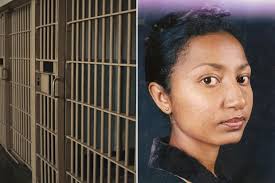
Reeyot Alemu Ethiopian Prison Places Restrictions On her visiters

Nairobi — The decision by authorities at Kality Prison to impose visitor restrictions on imprisoned journalist Reeyot Alemu constitutes harassment and runs counter to the Ethiopian constitution, the Committee to Protect Journalists said today.

Journalist Reeyot Alemu, currently serving a five-year jail term in Ethiopia, was awarded the Guillermo Cano World Press Freedom Prize for 2013.
"We call upon the Ethiopian authorities to lift these latest restrictions and allow Reeyot Alemu to receive all visitors," said CPJ East Africa Consultant Tom Rhodes. "She is a journalist, not a criminal, and should not be behind bars."
Reeyot, a critical columnist of the banned private weekly Feteh, began a hunger strike on Wednesday to protest an order by Kality Prison officials to turn in a list of visitors, according to local journalists and news reports. The officials did not provide an explanation for the request. In retaliation for the hunger strike, authorities forbade her from having any visitors excluding her parents and priest, local journalists said.
Two days later, prison officials said she could receive any visitors except for her younger sister and her fiancé, journalist Sileshi Hagos, the sources said. Sileshi was detained for four hours at the prison later that day when he attempted to visit Reeyot.
Reeyot stopped the hunger strike on Sunday, but decided not to receive any visitors until the restrictions on her fiancé and sister are lifted. The journalist is serving a 14-year prison term on vague terrorism charges that was reduced in August 2012 to five years on appeal.
It was not immediately clear whether the visitor restrictions were in connection with an article published by the International Women's Media Foundation last month that had been written by Reeyot. It is also unclear if the journalist wrote the letter from prison or if this was a translation of an earlier story. In the article, Reeyot criticizes Ethiopia's anti-terrorism law, an overbroad legislation that was used to jail and convict her for her critical coverage of the government.
Kality Prison Director Abraham Wolde-Aregay did not respond to CPJ's calls and text messages for comment. Desalegn Teresa, a spokesman for Ethiopia's Ministry of Justice, did not return CPJ's call for comment.
The denial of rights to Reeyot runs counter to the Ethiopian Constitution, which states: "All persons shall have the opportunity to communicate with, and to be visited by, their spouses or partners, relatives and friends, religious counselors, lawyers and medical practitioners."
In a December 2003 report, the United Nations Special Rapporteur on torture and other cruel, inhuman or degrading treatment or punishment stated that prisoners should be "permitted to have contact with, and receive regular visits from, their relatives, lawyers and doctors."The same report stated that "access to the outside world can only be denied on reasonable conditions and restrictions as specified by law or lawful regulations."
This is the second time in six months that the prison administration has put pressure on Reeyot, according to CPJ research. In March, officials threatened to put Reeyot in solitary confinement, according to sources close to her who spoke on condition of anonymity. Officials accused the journalist of indiscipline, according to news reports, a charge she denied.
In a report issued the same month, the United Nations Special Rapporteur determined that the rights of Reeyot under the UN Convention against Torture had been violated on account of the Ethiopian government's failure to respond to allegations of her ill-treatment. Reeyot had complained of mistreatment, and her health had deteriorated while she was held incommunicado in pre-trial detention, reports said.

Thursday, August 22, 2013

Ethiopia: African Media Leaders Must Boycott Ethiopia

Ethiopian journalists have come to expect the worst from our government.
One of the world's most hostile governments to an independent press, it has jailed friends and colleagues, forced them to leave the country and unjustly branded them as terrorists or enemies of the state for doing their jobs. But until now we have at least been able to count on the moral support of fellow journalists, media organizations and others opposed to injustice.
That has been changed by the deeply disappointing decision of the African Media Initiative (AMI) to hold its annual convention, the African Media Leaders' Forum, in Addis Ababa this year. Far from helping to improve Ethiopia's media environment, as suggested by the AMI's chief executive, Amadou Mahtar Ba, this move will instead embolden the government in its ongoing war against the press.
According to the Committee to Protect Journalists, at least 49 Ethiopian journalists have been forced into exile since 2007. Nine of our colleagues languish in prison, making the country the second worst jailer of journalists in Africa after Eritrea.
Just last year, the government forced the closure of Feteh ("Justice"), the prominent independent newspaper in Addis Ababa, because of its critical editorial line. Its publisher, Mastewal Berhanu, who was forced to leave the country after receiving threats from security agents, is one of those who have said that the AMI's decision is a blow to jailed and exiled Ethiopian journalists.
We have held the AMI in high esteem because of its stated commitment to"promote the development of pluralistic media". But we believe its justification for holding the forum in Ethiopia is self-serving and insensitive to Ethiopia's independent media community, and we cannot understand why Mr. Ba calls the decision "courageous".
The AMI's suggestion that holding the forum in Addis Ababa will further a process of "constructive engagement" with media stakeholders, including the government, is either naïve or aimed at benefitting narrow interests that do not really serve the Ethiopian media community at large. Neither the publishers' association nor the media council with which the AMI has interacted represent independent journalists, nor do they defend their rights.
Despite all the Ethiopian government's actions to stifle press freedom, I used to believe that if the press could organize itself it could gain enough strength to overcome its multi-faceted challenges. To test my belief in practice, I tried in 2011 to organize a monthly informal journalists' roundtable, bringing the highly-polarized media together to discuss investigative journalism, particularly on corruption issues.
This platform sought to help the media play its watchdog role and I hoped it would grow into an investigative or anti-corruption journalists' association.
But over ten months of meetings, the arrest and intimidation of journalists, along with the closures of local rights groups, rendered members frustrated and hesitant about forming an independent association.
Even the monthly roundtable meeting could not be sustained as participants gradually dropped out. Stringent laws, arrogant bureaucracy, threats and other challenges sapped the media of its energy, leaving it too weak to build one strong local media association which could help protect itself.
Today, professional media associations are either under the concealed patronage of the government or too scared to speak out for unlawfully imprisoned journalists such as Eskinder Nega, Reeyot Alemu, Woubshet Taye and many others. The Ethiopian government has ensured that there is no strong and vibrant media association that can stand for freedom of speech and press freedom.
Mr. Ba's suggestion that the government-sponsored media council "is known for its independence and commitment to building free and balanced media" confirms our fears that the AMI, its handful of local partners and the Ethiopian government are speaking with one and the same voice.
I appreciate the Pan-African approach of Mr. Ba. But Pan-Africanism begins with African solidarity, based on the understanding that injustice against one African is an injustice against all Africans. The Ethiopian government is willing to have the AMLF meet in Addis Ababa because it can use the event as a counter to international pressure for freedom of speech and press freedom.
In our struggle to realize the freedoms promised in our constitution, Ethiopian journalists have seldom heard African intellectuals, media leaders or the African Union call out our government on its grave abuses and support those struggling to be free. Apartheid and colonialism were not defeated with "constructive engagement" or apathy and silence.
Business interests that worked with the apartheid regime are marked with shame forever. The AMI should reconsider its plan to hold the meeting in Addis Ababa.
- Fasil Girma Aragaw can be followed on Twitter @fasiledesfasil or contacted by email.

Wednesday, July 31, 2013

Why African media leaders must head to Ethiopia | Newstime Africa


AMI
AMI
From November 6 to 8, 2013, the African Media Initiative (AMI) will hold its flagship annual convention, the African Media Leaders Forum (AMLF), in Addis Ababa, Ethiopia, focused on the theme “Media and the African Renaissance.” It will be AMLF’s sixth edition. Over the years, the Forum has become the largest gathering of media owners, operators and managers from across the continent and beyond. In November 2012, some 550 delegates attended the 5th AMLF in Dakar, Senegal.
While many have saluted the courageous decision of the AMI board to hold the Forum in Ethiopia, others have remained either sceptical or critical. The critics cite Ethiopia’s huge challenges in fostering an environment in which both press freedom and freedom of expression can thrive.
While I fully understand and respect the concerns being raised, I am convinced that Ethiopia remains the most appropriate venue for AMLF 2013 for a number of reasons.
Redefining History in Ethiopia for 2013 and Beyond
This year marks the 50th anniversary of the African Union, previously known as the Organisation of African Unity. Since its inception in 1963, the organisation, a symbol of Africa’s desire and determination to forge ahead in the true spirit of Pan Africanism, has been headquartered in Addis Ababa. Admittedly, it has not always endeared itself in equal measure to its collective body of stakeholders. Yet we must recognize its value as Africa’s largest intergovernmental organisation, where the most critical matters touching every single African are debated throughout the year.
I must admit that like many other Pan Africanists, I have been quite critical of some of the organization’s decisions. But I do acknowledge the key role it has played in the unification of Africa by promoting cooperation, friendship and mutual support among its member states, and the courageous positions it took at the vanguard for the struggle to liberate nations that were under colonial domination. The AU is marking a positive resurgence, under the excellent leadership of its chairperson, Dr. Nkosazana Dlamini-Zuma. It is our responsibility, as thought leaders and as Africans, to both encourage Dr. Dlamini-Zuma and her team and to roll up our sleeves to participate in the AU’s endeavours by contributing the best way we can. At the end of the day, building a brighter future for ourselves, our children and grandchildren is not the responsibility of politicians and development partners alone.
For these reasons, I am convinced that the story of the AU is the story of all Africans. Consequently, we must all participate in writing it. The organisation deserves to be honoured in its golden year in the same place where its story started – Addis Ababa.
The city is also where another key African institution is headquartered – the United Nations Economic Commission for Africa (UNECA) – which continues to work relentlessly for the improvement of the continent’s human and economic development.
As a strong advocate of constructive engagement, I see our coming together in Ethiopia as a great opportunity to engage with media stakeholders within the country, including the Government. In our preparations for the Forum, we have been both encouraged and actively supported by the Ethiopian media community – through its publishers association and the leaders of the nascent media council – which is known for its independence and commitment to building free and balanced media. Under AMLF’s National Organising Committee, Ethiopian media leaders are playing a critical role in a collaborative effort with AMI, AU, UNECA and the African Development Bank (AfDB).
True to the spirit of AMLF’s theme, “Media and the African Renaissance”, the heads of the three most influential African institutions have been invited as co-chairs of the Forum: Dr. Donald Kaberuka, President of AfDB, Dr. Carlos Lopes, Executive Secretary of UNECA and Dr. Nkosazana Dlamini-Zuma, Chairperson of the AU Commission.
AMLF 2013 intends to engage all stakeholders in Ethiopia and elsewhere to discuss openly, freely and respectfully on ways the media can contribute constructively to renewed efforts to craft a narrative about Africa that both promotes a dynamic Pan Africanism and reflects the demands and expectations of the continent’s citizens.
We will structure our deliberations around plenary sessions and working groups – ethics and leadership, access to finance and business development, as well as innovation and digital adaptation – to guarantee the full participation of all delegates.
A number of key challenges await us to ensure that in the next 50 years, Africa’s growing youth population has access to a good education and jobs; that the poorest segments of our communities are lifted out of poverty; that the environment, which is a source of livelihood for so many of our people, is not destroyed, and that peace and security prevail.
AMLF 2013 will be an opportunity for the public to play an integral role in the discussion. Indeed, AMI in collaboration with the Organisation of Social Science Research in Southern and Eastern Africa (OSSREA), based at the University of Addis Ababa, will organise a public debate on November 6 on the theme “My Africa in 50 years”.
In the midst of the media and public discourse, a range of conversations will contribute to a new Pan African narrative to inspire and re-energize us all. Indeed, AMLF will open what is now dubbed the “Governance Week” – with a number of institutions holding important meetings in Addis Ababa as a way to reaffirm their strong faith in the future of our continent, and its citizens and institutions. These include AMI’s traditional partners such as the Mo Ibrahim Foundation and Africa 2.0. Fresh additions will be Femmes Afrique Solidarite, one of the most influential women’s organizations on the continent headed by Bineta Diop, and ONE, the foundation set up by rock music star Bono, to contribute to Africa’s development.
What all these organizations have in common with AMI is the strong belief that Africa has great potential to considerably enhance the livelihoods of its people. We share an unbridled confidence that Africa will shed its stereotypical images and re-write its own story.
I remain convinced that participating in Addis Ababa Governance Week 2013 is the right thing to do for the African media community. We cannot miss this unique occasion to engage with leaders from around the continent and beyond to advance the cause of a free and prosperous Africa. As media practitioners, our greatest strength lies in our ability and courage to confront issues, no matter how daunting, as we seek to fulfil our mandate of serving the public interest.
In that regard, we must never refuse to engage in or shy away from situations that may seem to undermine our sense of community and fair play. Instead, we should embrace these challenges and meet them head on – this is the only way to progress. It is in the spirit of constructive engagement that we should view Ethiopia’s current media environment and, yes, add our collective “big voice” to its improvement. It is in this spirit and to create a forum for healthy debate that AMLF and its Governance Week partners are going to Ethiopia. I believe that only by embracing all voices and perspectives can we engender public trust in the media, an institution that is critical for the consolidation of democratic governance. Together we will refine Pan Africanism and re-define a narrative that is suited for our African renaissance.
© 2013, Amadou Mahtar Ba. All rights reserved. Newstime Africa content cannot be reproduced in any form – electronic or print – without prior consent of the Publishers. Copyright infringement will be pursued and perpetrators prosecuted.
Be Sociable, Share!

Friday, July 19, 2013

EU urges Ethiopia to release journalists, revise terror law | Reuters

EU urges Ethiopia to release journalists, revise terror law

Related Topics

ADDIS ABABA | Wed Jul 17, 2013 1:17pm EDT
(Reuters) - A European Union parliamentary delegation urged Ethiopia on Wednesday to release journalists and opposition politicians jailed under an anti-terror law, and revise the legislation that critics say is used to stifle dissent.
Ethiopian opposition parties routinely accuse the government of harassment and say their candidates are often intimidated in polls. All but two of the 547 seats in the legislature are held by the ruling party.
Critics point to a 2009 anti-terrorism law that makes anyone caughtpublishing information that could induce readers to commits acts of terrorism liable to jail terms of 10-to-20 years.
Last year, an Ethiopian court handed sentences of eight years to life to 20 journalists and opposition figures on charges of conspiring with rebels to topple the government.
"We note flaws in the impartiality of the judicial system," said Barbara Lochbihler, who led the delegation to the Horn of Africa country.
"Therefore we also call on the Ethiopian authorities to release all journalists, members of the opposition and others arbitrarily detained or imprisoned for exercising their legitimate right to freedom of expression, freedom of association, as well as freedom of religion and belief."
Government officials were not immediately available for comment, but they often dismiss claims that they are cracking down on dissent. They say the law is needed to fight separatist rebels and armed groups they say are backed by arch-foe Eritrea.
The delegation's visit came after thousands staged an anti-government procession in June in the first large-scale protest since a disputed 2005 election ended in street violence that killed 200 people.
A smaller protest in the northern towns of Gonder and Dessie followed over the weekend, and opposition officials said dozens have since been detained ever since.
The delegation said they were denied access to a prison where some of the journalists and politicians were being held.
"We acknowledge and recognize the highly volatile situation of Ethiopia's immediate neighborhood," Lochbihler said.
"However, when we look at the anti-terrorism legislation in this country, you think (about) how this legislation is implemented and being understood and being interpreted. This leads to a lot of arrests."
Analysts say the opposition may have found renewed vigor since the death last year of Prime Minister Meles Zenawi, who was praised abroad for delivering strong economic growth but criticized for keeping a tight grip on power for 21 years.

(Editing by Duncan Miriri; Editing by Michael Roddy)

Thursday, July 18, 2013

Ethiopia: EU group: Ethiopia should release jailed reporters | Presidential Election 2012 | Bradenton Herald

 — A European Union parliament delegation on Wednesday called on Ethiopia's government to release jailed journalists and activists, but in a sign the call may not be heeded the delegation was denied from visiting a prison it had been approved to see.
The head of the delegation, Barbara Lochbihler, said Ethiopia is jailing journalists and activists for "exercising their legitimate right to freedoms of expression, association and religion." The group is concerned by reports of misuse of the country's anti-terrorism legislation to stifle dissent, she said.
"Despite the country's excellent constitution, we note flaws in the impartiality of the judicial system," Lochbihler told journalists at a press conference Wednesday.
A spokesman for the Ethiopian Prime Minister said the country doesn't have any political prisoners and that prisoners would not be released "just because some European Union members said so."
According to the Committee to Protect Journalists, the Ethiopian government criminalizes the coverage of any group the government deems to be a terrorist group, a list that includes opposition political parties.
"Among those jailed is Eskinder Nega, an award-winning blogger whose critical commentary on the government's extensive use of anti-terror laws led to his own conviction on terrorism charges," the group said in its latest survey, which placed Ethiopia among the world's top ten worst jailers of journalists.
The EU parliament delegation said certain broadcasters are jammed in Ethiopia and that access to the Internet and social media are "regularly restricted." The practice is at odds with the Ethiopian constitution, the delegation said in a statement.
The four-person delegation, drawn from the parliament's subcommittee on human rights, said the Ethiopian government must guarantee freedom of speech and the right to peaceful assembly at all times in accordance with its constitution and obligations under international law. The delegation met top government officials, activists and leaders of the opposition.
Earlier on Wednesday the delegation was scheduled to visit to the country's Kaliti prison where most activists are believed to be serving their sentence. But the prison director turned the group back on arrival, saying "he didn't have time to work with you," according to a member of the delegation, Jorg Leichtfried.
Leichtfried told a news conference their visit was "overshadowed" by the incident. He described it as an episode he doesn't wish to experience again. All four delegation members spoke about the incident, which appeared to have frustrated them.
The delegation said Ethiopia itself has requested international assistance to improve its detention centers and their visit was to have a firsthand experience of the detention conditions.
Getachew Reda, a spokesman for Ethiopian Prime Minister Hailemariam Desalegn, said he was not aware of any decisions either to grant permission to see the prison or to deny it. Getachew said only family members can visit the prisoners.
"We don't have any single political prisoner in the country. We do have, like any other country, people who were convicted of crimes including terrorism who are currently serving their sentence. They would only be freed when either they complete their sentence or probation on good behavior," Getachew told the Associated Press on Wednesday. "We are not going to do release anyone just because some European Union members said so."
He criticized the delegation's statement, calling it "unhelpful" to relations between Ethiopia and the EU.
The EU is one of Ethiopia's largest donors with millions of dollar spent on development projects across the country.
Hailemariam was scheduled to meet the visiting delegation on Wednesday night.
The European lawmakers also met with African Union officials. Lochbihler criticized Nigeria and the AU for allowing Sudanese President Omar al-Bashir to travel to Abuja earlier this week. The International Criminal Court has an arrest warrant out for Bashir.

Read more here: http://www.bradenton.com/2013/07/17/4611711/eu-group-ethiopia-should-release.html#storylink=cpy