Saturday, May 4, 2013

AU urged to stand for press freedom and protection of journalists - Sudan Tribune: Plural news and views on Sudan


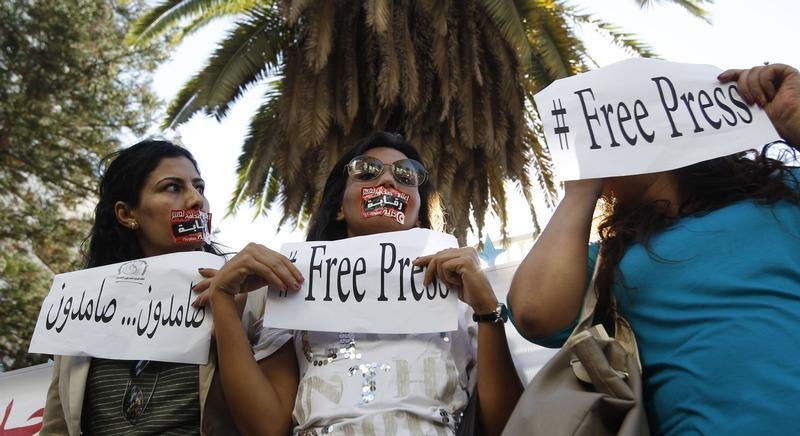
May 3, 2013 (ADDIS ABABA) - As the globe marks the World Press Freedom Day on Friday the international press rights group, Committee to Protect Journalists (CPJ), called on the African Union (AU) to promote press freedom and to engage in protecting African journalists.
In an open letter it sent to Chairperson of the African Union, Nkosazana Zuma, CPJ urged the AU chief to play a leading role in the efforts of releasing all journalists imprisoned in Africa.
"We urge you to use your office to persuade member states to comply with the letter and spirit of conventions they have signed that uphold press freedom," said CPJ Executive Director, Joel Simon.
The press advocacy group further appealed for justice to all African journalists killed in the course of duty.
According to CPJ research no justice was served to at least 80 journalists murdered in the continent since 1992.
At least 41 African journalists are said to spend World Press Freedom Day imprisoned in direct reprisal for their journalistic duty.
Nigeria where five journalists have been killed with impunity since 2009 and the East African nation of Somalia were labeled among worst nations globally in combating deadly, anti-press violence.
CPJ was alarmed that Ethiopia and the Gambia, which host offices of the AU, are among the nations holding journalists in jail.
"It is particularly disturbing that Ethiopia and the Gambia, which host offices of the African Union, are among the nations holding journalists in jail” Simon said.
“These imprisonments have silenced important voices, often in contravention of regional and international rulings".
With seven journalists behind bars, Ethiopia is one of Africa’s foremost jailer of journalists behind neighboring Eritrea which imprisons at least 30 journalists.
Meanwhile an Ethiopian court on Thursday rejected an appeal over the case of the blogger Eskinder Nega who is held on terrorism related charges.
The court upheld an 18-year prison sentence.
In reaction to the court ruling CPJ Africa Advocacy Coordinator Mohamed Keita said: "This ruling trivializes the serious crime of terrorism, upholds a politically motivated travesty of justice, and lessens Ethiopia’s international standing".
"As a member of the U.N. Human Rights Council, Ethiopia should comply with its obligations under international law and its own constitution and release Eskinder unconditionally. The persecution of Eskinder and other journalists is the hallmark of a regime fearful of the opinions of its citizens."
The New York-based press freedom group mentioned Ethiopian journalists, Reeyot Alemu, the 2013 UNESCO World Press Freedom Prize winner, who is serving a five-year term and Eskinder Nega, 2012 laureate of PEN American Centre, on “fabricated terrorism charges” among several journalists who should be released immediately.
The African Commission on Human and Peoples’ Rights and the UN High Commissioner for Human Rights, among other international institutions, have in the past censured Ethiopia for the imprisonment of Reeyot and other journalists facing lengthy prison terms under the country’s overly broad anti-terrorism law.
By Tesfa-Alem Tekle

Ethiopia: Terrorism Law Decimates Media | Human Rights Watch


Free Jailed Journalists, Allow Media Freedom
MAY 3, 2013
Ethiopia’s journalists shouldn’t be spending World Press Freedom Day in jail on trumped-up terrorism charges. Freeing these journalists would be an important step toward improving Ethiopia’s deteriorating record on press freedom.
Leslie Lefkow, deputy Africa director.
(Nairobi) – The Ethiopian government should mark World Press Freedom Day, on May 3, 2013, by immediately releasing all journalists jailed under the country’s deeply flawed anti-terrorism law. On May 2, 2013, the Supreme Court upheld an 18-year sentence under the anti-terrorism law for Eskinder Nega Fenta, a journalist and blogger who received the 2012 PEN Freedom to Write Award.

Eleven journalists have been convicted and sentenced since 2011 under Ethiopia’s repressive anti-terrorism law, including six in absentia. Three of the eleven are currently in prison. Two other journalists are currently on trial under the anti-terrorism law. Another journalist, Temesgen Desalegn, the editor of the now defunct independent magazine Feteh, is on trial for three offenses under the criminal code.

“Ethiopia’s journalists shouldn’t be spending World Press Freedom Day in jail on trumped-up terrorism charges,” said Leslie Lefkow, deputy Africa director at Human Rights Watch. “Freeing these journalists would be an important step toward improving Ethiopia’s deteriorating record on press freedom.”

Since Ethiopia’s anti-terrorism law was adopted in 2009, the independent media have been decimated by politically motivated prosecutions under the law. The government has systematically thwarted attempts by journalists to establish new publications. Blogs and Internet pages critical of the government are regularly blocked, and in 2012 printing houses came under threat for printing publications that criticized the authorities. Mastewal Birhanu, the manager of Mastewal Publishing, for example, was charged under the criminal code for printing the editions of Feteh that were the basis for the charges against Temesgen.

Human Rights Watch has repeatedly raised concerns about the anti-terrorism law’s overly broad definition of “terrorist acts.” The law’s provisions on support for terrorism contain a vague prohibition on “moral support” under which only journalists have been convicted.

One of the three journalists sentenced under the law who remain in prison is Eskinder Nega Fenta, a veteran Ethiopian journalist. He had been detained numerous times, and was sentenced in July 2012 to 18 years in prison for conspiracy to commit terrorist acts, as well as participation in a terrorist organization. Eskinder’s sentence was upheld on appeal on May 2, 2013. The United Nations Working Group on Arbitrary Detention, a panel of independent experts, concluded in November that Eskinder’s imprisonment was arbitrary and “a result of his peaceful exercise of the right to freedom of expression.”

Woubshet Taye Abebe, who is serving a 14-year sentence under the anti-terrorism law, was a winner of the 2012 Hellman-Hammett Award, administered by Human Rights Watch. Woubshet was the deputy editor of the Awramba Times prior to his arrest in 2011.He alleged in court that he was tortured in pretrial detention, as have other defendants detained on terrorism charges. The court did not investigate his complaint.

Reeyot Alemu Gobebo, a journalist for Feteh, was convicted on three counts under the terrorism law for her writings. Her sentence was reduced from 14 years to 5 years on appeal, and she remains in prison. Reeyot was recently awarded the prestigious 2013 UNESCO/Guillermo Cano World Press Freedom Prize. She will miss the May 3 award ceremony in Costa Rica.

Members of the international media have also been charged under the anti-terrorism law. In December 2009, two Swedish journalists, Martin Schibbye and Johan Persson, were convicted for “rendering support to terrorism” and entering the country illegally “to commit an act that is a threat to the well-being of the people of Ethiopia.” They had entered the country without a visa and were arrested while investigating the situation in Ethiopia’s eastern Somali region, site of a longstanding insurgency. They were pardoned and released in September 2012 after more than a year in prison.

“The journalists who have been detained and convicted have one thing in common – they were all exercising their right to freedom of expression, a right guaranteed by the Ethiopian constitution and international law,” Lefkow said.

In 2012 Hailemariam Desalegn became Ethiopia’s prime minister following the death of Meles Zenawi, under whose leadership the country experienced a sharp decline in civil and political rights – including freedom of expression. Hopes that Hailemariam’s government would improve Ethiopia’s record on free expression have been dashed by ongoingarbitrary arrests and detentions of journalists and others.

Since January 2012, members of Ethiopia’s Muslim community have held regular protests in the capital, Addis Ababa, and other towns over alleged government interference in religious affairs. The government has harassed and detained journalists who have reported on these protests. Yusuf Getachew, former editor of the now-defunct Islamic magazine Yemuslimoch Guday, was charged under the anti-terrorism law and is on trial, though the trial is closed to the public. Solomon Kebede,Getachew’s successor at the magazine, was arrested on January 17 and has also been charged under the anti-terrorism law. Prior to charges being bought, Solomon spent more than two months in pre-trial detention at Maekelawi prison in Addis Ababa, which is notorious for torture, without access to legal counsel.

The right to freedom of expression is guaranteed in the Ethiopian constitution, and in numerous African and international conventions, including the African Charter on Human and Peoples’ Rights, which Ethiopia has ratified. In November, Ethiopia was appointed to the United Nations Human Rights Council and as such has made a commitment to uphold “the highest standards of human rights as enshrined in the constitution of the country and in the international and regional human rights treaties that Ethiopia has ratified” – including rights to freedom of expression.

“As a recently appointed member of the UN’s Human Rights Council, Ethiopia should take swift steps to improve the media environment in the country,” Lefkow said. “These include immediately releasing all journalists imprisoned under the anti-terrorism law, amending the law’s worst provisions, and ending the harassment of what little independent media remains in the country.”

Friday, April 26, 2013

Ethiopian Govt Transfers Editor Woubshet Taye to Remote Prison

PRESS RELEASE
New York — The Committee to Protect Journalists protests Ethiopian authorities' transfer of independent newspaper editor Woubshet Taye to a remote prison several hours away from his family's home. Woubshet has been imprisoned since June 2011 on vague terrorism charges that CPJ has determined to be unsubstantiated.
"Moving detainees to prisons far from their families is a tactic long used by governments that wish to not only further penalize the individuals but to punish their loved ones as well," said CPJ Africa Advocacy Coordinator Mohamed Keita. "Woubshet Taye should not be in prison at all, never mind held in one so far from his family. We call on Ethiopian authorities to return him to a facility closer to his home, and to reconsider the unjust conviction that put him behind bars in the first place."
Authorities on Friday transferred Woubshet from Kilinto Prison, outside Addis Ababa, to a detention facility in the town of Ziway, about 83 miles southeast of the capital, according to local journalists and the U.S.-based exile-run AwrambaTimes.com. The authorities did not provide a reason for the transfer. Local journalists told CPJ that Woubshet's wife and four-year-old son would now have to travel more than four hours to reach the prison to visit the journalist.
Woubshet, former deputy editor of the now-defunct independent weekly Awramba Times and a recipient of Human Rights Watch's Hellman/Hammett Award, was sentenced in January 2012 to a 14-year prison sentence on charges lodged under Ethiopia's broad anti-terrorism law. The journalist was arrested a couple of weeks after he published a column in Awramba Times that critically assessed the ruling party's performance in its two decades of rule. The paper was known for its bold coverage of local issues.
The U.N. Special Rapporteur on torture and other forms of cruel, inhuman or degrading treatment or punishment, said last month that Ethiopia had violated Woubshet's rights by failing to address his allegations of being tortured in custody, despite Ethiopia's commitment to "uphold the highest standard of human rights."
CPJ research shows that other states that have imprisoned journalists have used the tactic of moving journalists to prisons far from their homes as a means of punishing them and their families. Cuba, for example, placed journalists in prisons hundreds of miles from their families at the height of the Black Spring crackdown in 2003, according to CPJ research.
For more data and analysis on Ethiopia, visit CPJ's Attacks on the Press.

Tuesday, April 23, 2013

Somalia - Journalist Gunned Down Outside Mogadishu Home

Reporters Without Borders is shocked to learn that another journalist has been killed in the Somali capital, Mogadishu. It was Mohamed Ibrahim Rageh, who worked for Somali National Television and Radio Mogadishu, which are both state-owned. Two gunmen trailed him home and shot him yesterday evening.
"The supposed improvement in security in Mogadishu is for the time being still very fragile," Reporters Without Borders said. "The Somali capital continues to be one of the world's most dangerous places for journalists.
"Rageh had received threats in the past and had just returned to Somalia after fleeing abroad for safety reasons. He is the second journalist to be killed in connection with his work in Somalia since the start of the year."
Relatives said Rageh was gunned down outside the door to his home in Ma'ma'anka neighbourhood, in the Dharkenley district of Mogadishu, at around 6 pm. The two gunmen shot him seven times in the chest and head before fleeing.
Rageh had recently returned to Somalia after several years in Kenya and Uganda. In 2009, he resigned as a Radio Shabelle host and member of the National Union of Somali Journalists (NUSOJ) in order to leave the country after receiving death threats from the Islamist militia Al-Shabaab (http://en.rsf.org/predator-al-shabaab,42476.html).
He is the fourth journalist to be killed in Somalia since the start of 2013, but only the second to have been targeted in connection with his journalistic work. A total of 18 journalists were killed in Somalia in 2012, making it the world's deadliest country for media personnel.
More information about media freedom in Somalia: http://en.rsf.org/somalia.html.

ትንሽ ምክር ቤጤ ለወዳጄ ልጅ ተክሌ


በኢሳት ላይ ያለህን ቅሬታ በአውራባ ታይምስ ድህረ ገጽ ላይ ወጥቶ አነበበኩት። የጹሑፉ ፍሬ ነገር አላስገረመኝም ወይም
በቀረበው ሐሣብ ላይ ቅሬታ የለኝም።ቅሬታ የሚኖርብኝና ይህንን እንድጽፍ ያነሳሳኝ: ግን: ቅሬታውን ለማቅረብ
የመረጥከውመንገድ ነው።
ልጅ: ተክሌ:እኔ እስከማውቅህ ድረስ ለኢሳት ቀረቤታ ያለህና ለኢሳት ሥራ ዘወትር በትጋት: አስተዋጽኦ: በማድረግህ: ስለሆነ:
ለኢሳት ያለህን አስተያየት ወይም ቅሬታ ለስራ:ባልደረቦችህ:ለድርጅቱ ሃላፊዎች ወይም ለቦርዱ ማቅረብ: ነበረብህ ባይ ነኝ።
ይህን በግል ብነግርህ መልካም ነበር። ሆኖም ያአንተ ጹሑፍ በአደባባይ: በመውጣቱ: እኔም ምክሬን በአደባባይ ላደርገው ብዬ
ነው።ሌሎቹም እንዲሰሙኝ።

ይህ የመናገር ነፃነቴ ነው ልትለኝ ትችላለህ:: ልክ ነውም። ግን እኮ የመናገር ነፃነት
የሚመጣው ከሃላፊነት ጋራ ነው። ያውም “self -censorship” ከሚሉት:
ሃላፊነት: ጋር ። ላብራራ: በአንድ ሰው ፊት ላይ ጉድፍ ቢኖር የተለያዩ ሰዎች
በተለያየ መንገድ ይህን በሰውዬው ላይ ያለውን:ጉድፍ: ለሰውዬው ለመንገር
ይጥራሉ።
ሕፃናት የሆኑ እንደሆነ ጉድፉን ያዩት በጣም ግልጽ በሆነ ግን ሰውዬውን
በሚያሳፍር መንገድ :በሰው: መሐል: አንተ ፊትህ: ላይ ቁሻሻ: አለብህ ብለው
ይናገራሉ። ልጅ ያየው እንደሚባለው፤‘ትልቅ ሰው’ የሆነ እንደሆነ ጉድፉን ያየው በቀጥታ ተናግሮ ሰውዬውን ከማሳፈር
የተለየዩ ዘዴዎችን ተጠቅሞ ለሰውዬው የጉድፉን መኖር ሊጠቁመው ይችላል።
አየህ: ልጅ ተክሌ ሁለቱም መንገዶች: ሰውዬው ጉድፉን: እንዲያነሳ ለማድረግ የተደረጉ ናቸው ግን አቀራረባቸው የተለየ
ነው።አንተም ሁለተኛውን:መንገድ: ተጠቅመህ:ቢሆን: ኖሮ ምንኛ: ባደነቅሁ ነበር።በተለይም :በአሁኑ: ሰአት: ጠላቶቻችን:
በእቶን:እሳት: በእሳት: በሚለበለቡበትና:ያን:ለማጥፋት:በሚቅበዘበዙበት:ጊዜ:: ግን: አልሆነም:: ወደፊት: እንደሚታረም:
ግን:ተስፋ:አደርጋለሁ::

ልጅ ተክሌ ጹሑፎች ካናደዱ ወይም ካለስጨበጨቡ አይዋጥልኝም ብለሃል።እኔ በዚህ አልስማማም። ምክንያቱም እንዲህ
ዓይነቱ ጹሑፎች ስሜታዊነትና:ጊዜያዊነት: ያጠቃቸዋልና:: በኔ: እምነት: ጽሁፎች:አይምሮን የሚኮረኮሩ (thought
provoking) እና ገንቢ ቢሆኑ: ምርጫዬ: ነው፤ ሆኖም: ግን: ምርጫህን: አልጋፋም።እንዲያው: በውልና ጥቅምና ጉዳቱን
ባመዛዘነ መንገድ ይሁን ከሚል አንፃር እንጂ::
ልጅ ተክሌ እንደያው ድፍረት ባይሆንብኝ ለወዲሁም ታላቅህ ነኝ ና፤ ምክሬን ሰማኝ ኢሳቶች ጥፋት ካለባቸው( ፍጹም
ናቸውም ብዬ ለመከራከር አልከጅልም) እባክህ በጆሮ አቸው ሹክ በላቸው: ደግሞም: ከእኔ ይበልጥ: ቅርበት አለህና! እንዲህ
በአደባባይ መናገሩ ከጥቅሙ ጉዳቱ ያመዝናል። እኔም አንተም ለጠላቶቻችን ቅጣት ያህልም ቀዳዳ መስጠት የለብንም ብዬ
በማሰብ በቅን ልቦና የሰጠሁት አስተያየት ስለሆነ ምክሬ ትቀበለዋለህ ብዬ አስባለሁ።
የኢሳትም አስተዳደርም ግልጽ የሆነ የቅሬታ መስሚያና ማስወገጃ መንገድ (complaint resolution process)
አለው ብዬ ስለማስብ በዚያ መጠቀሙ ለሁላችንም ይበጃል: እላለሁ።
ታዛቢ

Thursday, April 18, 2013

Reeyot Alemu Ethiopian jailed journalist u named winner of 2013 UNESCO Press Freedom Prize

Reeyot Alemu
Reeyot Alemu
Imprisoned Ethiopian journalist Reeyot Alemu has been named the winner of the 2013 UNESCO-Guillermo Cano World Press Freedom Prize.
Announcing the winner April 16, 2013, UNESCO said Ms Alemu was recommended by an independent international jury of media professionals in recognition of her “exceptional courage, resistance and commitment to freedom of expression.”
Accordingly, the Jury took note of Reeyot Alemu’s contribution to numerous and independent publications.
She is noted for writing critically about political and social issues, focusing on the root causes of poverty and gender equality.
Reeyot worked for several independent media. In 2010 she founded her own publishing house and a monthly magazine called “Change”, both of which were subsequently closed.
In June 2011, while working as a regular columnist for “Feteh,” a national weekly newspaper, Ms Alemu was arrested.
She is currently serving a five year sentence in Kality prison.
The UNESCO Guillermo Cano World Press Freedom Prize was created in 1997 and it is awarded annually during the celebration of World Press Freedom Day on May 3, which will take place this year in Costa Rica.

Thursday, April 4, 2013

Ethiopia Drafting Law to censure Internet, Radio and TV


Ethiopia is preparing a draft law to regulate Internet, radio and TV. The draft is being prepared by a steering committee constituting the Ethiopian Broadcasting Authority, Ethiopian Ministry of Communications & Information Technology and Information Network Security Agency. The Ethiopia Radio & Television Agency is also participating in the drafting process of the new law.
The draft bill is expected to be finalized and forwarded to the Council of Ministers before the end of the current Ethiopian Fiscal Year, according to Leul Gebru, deputy director general of Ethiopian Broadcast Authority.
The bill is required to regulate Internet, television and radio broadcasts, once the current analogue infrastructure is transformed to a digital system.
“The law is needed, in order to prepare for the management complexities that will follow digitization,” 
A federal agency will also be established  to administer the broadcasting network and radio waves, with Ethiopian Broadcast Authority controlling the content transmitted on different channels"
Under the new bill, additional licenses are expected to be issued, including mobile TV broadcasting license,.
The International Telecommunications Union (ITU) agreed in 2006,  to change all broadcasting frequencies to digital by 2015, with extended period until 2018 for Ethiopia and most African countries.
The change to digital will not only require the import of digital televisions, but also 74 additional transmitters, necessary to transmit the extra channels, according to Leul.